
Keynote Speakers Research Interests
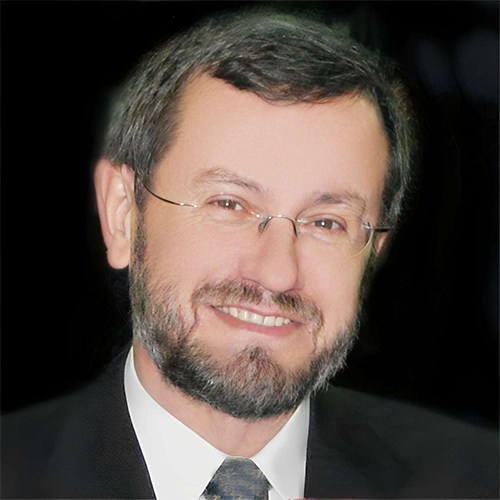
Prof. Loannis Pitas
Department of Informatics of AUTH and a chair of the International AI Doctoral Academy
AI and Big Data Analytics for Natural Hazards in Disaster Risk
Management
Prof. Loannis Pitas
Department of Informatics of AUTH and a chair of the International AI Doctoral Academy
Prof. Ioannis Pitas (IEEE fellow, IEEE Distinguished Lecturer, EURASIP fellow) received the Diploma and PhD degrees in Electrical Engineering, both from the Aristotle University of Thessaloniki (AUTH), Greece. Since 1994, he has been a Professor at the Department of Informatics of AUTH. He has been the Director of the Artificial Intelligence and Information Analysis (AIIA) lab (1999-2025). He has served as a Visiting Professor at several Universities. His current interests are in the areas of computer vision, machine learning, autonomous systems, intelligent digital media, image/video processing, human-centred computing, affective computing, 3D imaging, and biomedical imaging. He has published over 970 papers, contributed to 48 books in his areas of interest, and edited or (co-)authored another 16 books.
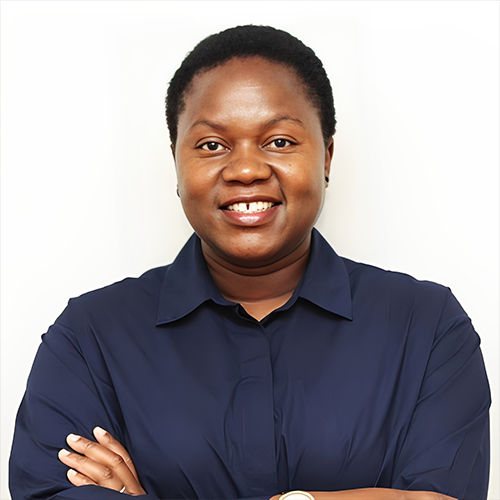
Dr Olivia Kunguma
Disaster Management Training and Education Centre Free State University (UFS)’s
Alert and Warning in the Climate Change Era: Reconsidering a Risk Communication Consensus.
Dr Olivia Kunguma
Disaster Management Training and Education Centre Free State University (UFS)’s
Dr. Kunguma is a recognised academic in Disaster Management, holding a PhD focused on disaster risk governance. With a Master’s in Disaster Management, BA and Honours in Integrated Marketing Communication, she approaches disaster management from a comprehensive viewpoint. Her courses, in Strategic Disaster Communication, Management and Institutional Arrangements, reflect her dedication to educating future professionals. She has graduated more than 400 Post Graduate Diploma, 20 Master’s research students, and graduated one PhD candidate in Disaster Management. Outside her academic work, she enjoys binge-watching Netflix series, experimenting with new recipes, and travelling to explore diverse cultures, showcasing her balanced and dynamic life.
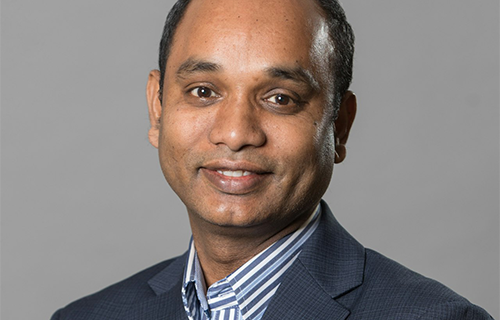
Prof. Ranjan Datta
Canada Research Chair in Community Disaster Research
Indigenous Knowledge in Disaster Risk Reduction and Prevention through Development Policies in African Regions.
Prof. Ranjan Datta
Canada Research Chair in Community Disaster Research
Dr. Ranjan Datta is a Canada Research Chair in Community Disaster Research and Associate Professor in Indigenous Studies at Mount Royal University. His interdisciplinary research bridges Indigenous land-based knowledge, climate justice, and community-led disaster adaptation in Canada, Bangladesh, Nepal, Ghana, and beyond. He has a strong, high-ranked publication record and has led or collaborated on more than 35 major research grants. Dr. Datta holds key academic appointments internationally, including as Senior Research Fellow with the Earth System Governance Network (Netherlands) and Adjunct Professor at the University of Manitoba. He serves as Associate Editor for the Journal of Environmental Value and is Chair of the Research Awards Committee at Mount Royal.
- Phone:+1 (859) 254-6589
- Email:info@example.com
KEY TOPICS
• The Risk concept in history and across various scientific domains;
• Variability of risk determinants/components: exposure, hazard, vulnerability, adaptive capacity, resilience;
• Spatial and temporal aspects of systemic risk;
• The past and the future of risks, crises, and disasters;
• Risk in education and learning in and beyond;
• Spatial databases for risk assessment and mapping;
• Risk assessment methods capturing the variability of risk;
• Areas/Africa regions, hot spots for hazards, risks, and disasters (geophysical, meteorological, hydrological, climatological);
• Vulnerability- and resilience-based social-spatial inequalities;
• New technologies for hazard and risk observation and monitoring;
• Historical and contemporary (disaster) risk management paradigms;
• Spatial and temporal issues of the disaster risk management cycle;
• Urgency and uncertainty in crisis management;
• Management models adapting to the variability of risk; • Engineering and non-engineering safety regulations in different eras and contexts;
• Past and new technologies in risk and crisis management;
• Emerging risk identification in African cities and vulnerable rural communities
RISK PERCEPTION, COMMUNICATION AND GOVERNANCE
• Multi-stakeholder dialogue and risk communication: Bridging the communication gap
• Risk perception and communication in different regions, cultures, and eras;
• Systemic risk communication and governance;
• Risk governance case studies for different African regions;
(DISASTER) RISK MITIGATION IN SECTORAL POLICIES
• Policies for enhancing personal, community, institutional, and urban resilience;
• Climate Change mitigation and adaptation policies;
• Risk-based Spatial Planning;
• Early warning, emergency response, decision-making, and resilience building
• Risks and Disaster insurance policies in risk management
MONITORING AND COPING WITH REAL RISK PROBLEMS
• Temporal/spatial analysis and management of geophysical hazards and risks;
• Temporal/spatial analysis and management of Climate Change hazards and risks;
• History and geography of public health, epidemic, and pandemic risks;
• Food Security/Safety in SADC and beyond;
• Risk Culture and Acceptable Risk in and beyond
• (Disaster) Risk management and Local knowledge/cultural Inclusion
• International and regional standards for climatic disaster risk
